Beyond Survival of the Fittest
The questions associated with evolution have always been the core of debate. We all have questions regarding evolution that keep us engrossed, and one of these questions is, "are humans an evolutionary accident?" Evolution never had a rigid and precise template to make ideal organisms. It just went with whatever seemed great for survival. The core purpose of evolution was not perfection, but to ensure we survived to reproductive age and passed our genes to the next generation. If so, then we are considered successful. Evolution used every easy way out to align that evolutionary baggage with the environment. The human body is full of flaws. These flaws originated from those genetic corrections evolution made and the formation of suitable traits for survival. For example, in most animals, the breathing tube and the tube used to swallow food are separate, but in humans, these two tubes cross paths in the throat. There is just a small flap of tissue called the epiglottis that closes down every time we ingest water and food. If this flap of tissue takes even one millisecond to close, we choke as a result. Similarly, to walk straight, we had to evolve a small birth canal and a narrow pelvis. During evolution, humans developed large brains, and this combination made childbirth agonizingly painful and extremely difficult, this phenomenon known as the obstetric dilemma, evolutionary theory that explains how evolution made childbirth extremely painful.
These are primary examples of our structural flaws that developed after those genetic corrections, serving as classic manifestations of the theory of evolutionary constraints which demonstrates that we can only evolve anatomical imperfections rather than an optimized organismal blueprint.Nature was not on our side, and it was pure luck with which we are here today. When the asteroid hit the earth, eradicating the dinosaurs, the impact was so strong that it blasted trillions of metric tons of molten rock and vaporized material into space. As this material returned, atmospheric friction heated the detritus until the temperature reached about 1,480°C or 2,700°F, turning the sky red. The upper surface of the earth was burned completely. Animals that could burrow and stay underwater survived, while the dinosaurs could not. Tsunamis and shockwaves hundreds of meters high occurred, causing the death of many marine animals. Huge clouds of dust and ash gathered in the sky, blocking sunlight from reaching the Earth for years. Because of this, photosynthesis could not occur and the food chain was destroyed. As a result, the temperature of the Earth dropped, causing an impact winter for many years. It took approximately 33,000-year for the recovery of the planet. After the earth went through this devastating destruction, it took ten million years for a carbon spike to turn the planet tropical again.After the greenery flourished. Some mammals went back into the oceans, while others learned to climb trees, evolving features like forward-facing eyes with excellent depth perception, a flexible grip, and larger brains. These evolutionary shifts did not happen all at once, but step-by-step with each passing primeval era. If any of these events had not occurred, we would not have survived. This reflects on the theory of “historical contingency”, formulated by Stephen Jay Gould, which demonstrates that life is a result of capricious and fortuitous events.We did not outcompete other groups because we were perfect, and it was pure luck that random traits aligned with the changing environment. This helped us survive while outlasting other highly strong and intelligent human species groups that suffered the bad luck of extreme climate conditions, maladaptive traits, and diseases.Vestigial organs exemplify random evolution very well. Vestigial organs refer to the anatomical structures of the body that no longer serve their ancestral purpose for survival and linger as vestigial remnants within the body. For example, the appendix is a finger-shaped, two-to-four-inch-long pouch that once helped our ancestors' cecum to digest and break down fibrous cellulose. It was larger and housed symbiotic gut bacteria, which were crucial for survival in the past because of an unrefined diet. As we evolved and started consuming cooked and easily processed meals, this organ shrank, becoming smaller, and now stores healthy gut bacteria.
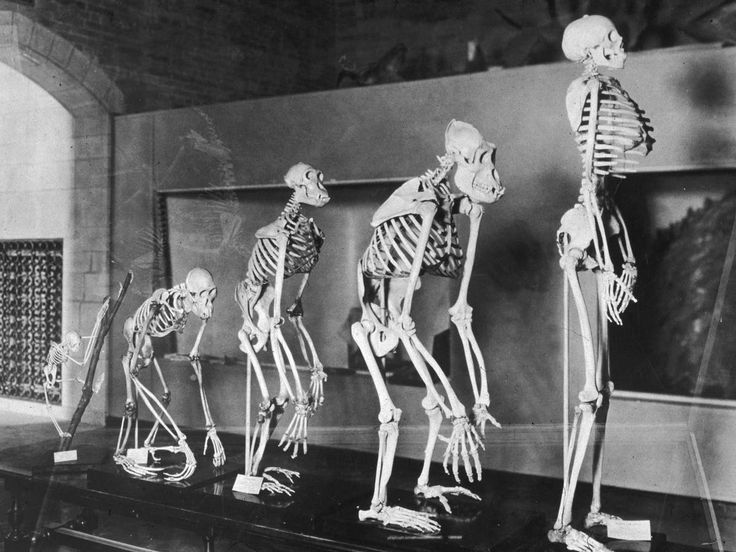
There is a widespread fallacy that to survive and pass one’s genes to the next generation, an individual must become entirely selfish according to the view of the survival of the fittest. Many evolutionary biologists invalidate this, stating that cooperation, working together, and sharing actually help in survival and make it easier. Charles Darwin, the famous English geologist and naturalist, is considered the pioneer of this perspective. He stated that evolution does not prefer the individual only, because genes can still be passed and survival is possible through cooperation within a species group. It is observed in animals that there are two types of assistance, which are direct and indirect assistance. Many animals stay in groups that provide mutual safety and a more stable and dependable food supply, for example, wolves hunting in packs or meerkats taking turns acting as lookouts. In some cases, low ranking animals stay in groups to help raise offspring, for example, subordinate wild dogs that forgo breeding to nurse and protect the alpha female’s pups. In other cases, animals help their close relatives survive specifically to pass on shared genes. Animals are naturally inclined to help close relatives who carry similar genetic material as them.
This theory is known as kin selection,and it was mathematically formalized by the famous British evolutionary biologist, William D. Hamilton. His research successfully untangled Darwin's paradox regarding why animals sacrifice their own life to help close relatives. Cooperation is even seen in plants, despite the absence of a complex nervous system like that of animals. They use complex chemistry for communication, using underground fungal networks to cooperate with one another.Similarly,plants forge into bacterial symbiosis,for example, plants need nitrogen from the air for their development and survival but cannot assimilate it directly from the atmosphere. A bacterium called Rhizobium solves this by converting atmospheric nitrogen into ammonia, allowing plants to easily absorb it. In legume plants, these bacteria live in tiny swellings on the roots, where the plants provide the bacteria with a sustained carbohydrate food supply in exchange for the fixed nitrogen.
Plants completely cut off the oxygen and food supply of cheater bacteria that fail to reciprocate. All these examples indicate that, to survive, cooperation is necessary, yet how humans who can cooperate with each other are capable of malicious violence makes us question the dualistic nature of humans.
One of the cognitive catalysts for evolutionary success is that Homo sapiens can cooperate seamlessly in large groups with adaptability. Due to our collective conviction in myths, we have triumphed in cooperation; this sets us apart from other species.This reflects the anthropological theory of an "inter-subjective reality," popularized by Yuval Noah Harari.By belief in a shared myth, it means that when extensive collectives of individuals believe in an abstract concept that has no existence in the objective physical realm, it exerts profound influence. Consider the myth of currency and paperwork; because of our collective belief, we are inclined to believe that these papers hold intrinsic value.
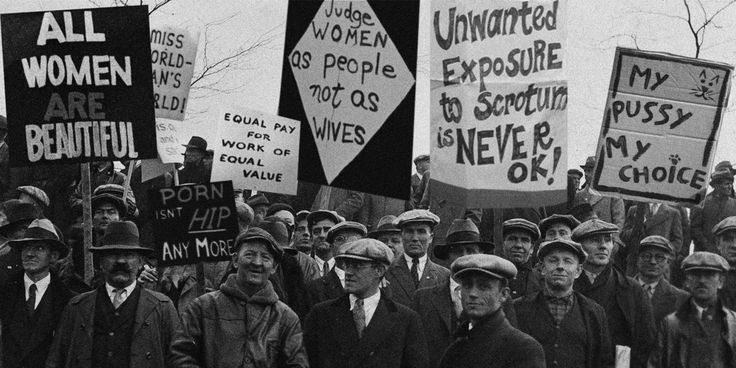
Where there exists intraspecific and proactive aggression, there is also reciprocal altruism and empathy. Yet, the violence we witness on a daily basis in the news is undeniable. It drives us to question our roots, asking whether humans are naturally violent or if we are driven by external factors. To survive and pass on their genes, humans developed extreme mechanisms driven by violence, and our brain evolved for this purpose as a hyper-responsive and complex organ. In the hypothalamus, which serves homeostasis and controls basic functions such as eating, thirst, and sexual urges, there is a subnucleus with 10,000 neurons that serves as an attack detector. This activates when animals see a predator or sense a threat to their nutrient supply or territory. A part of the brain called the medial amygdala detects danger through the sensory system and signals the ventrolateral part of the ventromedial hypothalamus. To avoid a reflexive outburst, the orbitofrontal cortex and the dorsolateral prefrontal cortex cooperate. If this whole system fails to prevent the occurrence of an attack, a fight occurs. If the animal triumphs in this fight, a massive amount of a neurotransmitter called dopamine and testosterone are released, eliciting a feeling of dominance, tranquility, and gratification. This secretion cements aggression cells and rewires the brain's whole chemistry. This is known as synaptic plasticity, which means that these changes literally alter our brain structure. This chemical feedback mechanism turns on the winner effect, structurally altering the brain to lower its trigger point for succeeding aggression.
Consequently, some individuals, driven by this feeling of dominance, tend to bully others. These survival mechanisms evolved because they were meant for survival, but they ultimately became the catalyst for violence. One question still remains, which is, why does proactive violence exist?
In proactive violence, crime is consciously premeditated and strategic. Humans started using proactive violence long ago for survival because a planned attack was safer than directly attacking a rival, and in some cases, it allowed them to steal food from other groups. Humans used plans to get rid of aggressive alpha males and to stop growing threats of other dominant groups. All these mechanisms point toward the self-domestication hypothesis, showing how we used these calibrated calculations for group survival. Therefore, if we examine our roots, it is irrefutable that proactive violence existed long ago. Today, everything has been modernized, and we have access to so many amenities. The situation is different, as we do not have to fight like our ancestors did just for survival. Instead, we tend to become violent when societal stressors trigger these tendencies. Ultimately, we are driven by both our evolutionary roots and societal stimuli, just like violence, are all our other psychological dispositions naturally inherited or learned?
The nature vs. nurture debate has persistently been a central fixture within the scientific community.Many individuals often differentiate between the two, with one side indicating that humans are born with specific psychological dispositions, such as base intelligence, IQ ranges, temperament, natural preferences, gender identity, behavioral disorders, violent tendencies, language learning capabilities, and inherent selflessness. On the contrary,the opposing side believes that we are heavily influenced and shaped by our environment, arguing that all of these behavioral proclivities are learned entirely through observation and social interaction. To investigate this,Robert Plomin, a famous American-British psychologist and geneticist, conducted a massive analysis observing over 10,000 pairs of twins to determine exactly how much we are influenced by our environment versus how much we are born with. Ultimately, modern science does not separate these two predilections. Plomin's research shows that both genetics and the environment profoundly influence and shape human development in conjunction. This shows that a gene is not a completely independent template and cannot function entirely on its own. Instead, it requires a specific environment to execute its full potential. Nature and nurture are deeply dependent on each other, suggesting an interplay where on average, roughly 50% of genetic influence works in equipollence with 50% of environmental influence. Furthermore, Plomin highlighted that in this genetic context, the environment does not merely indicate parental style, but is driven by one's own unique, personal experience.
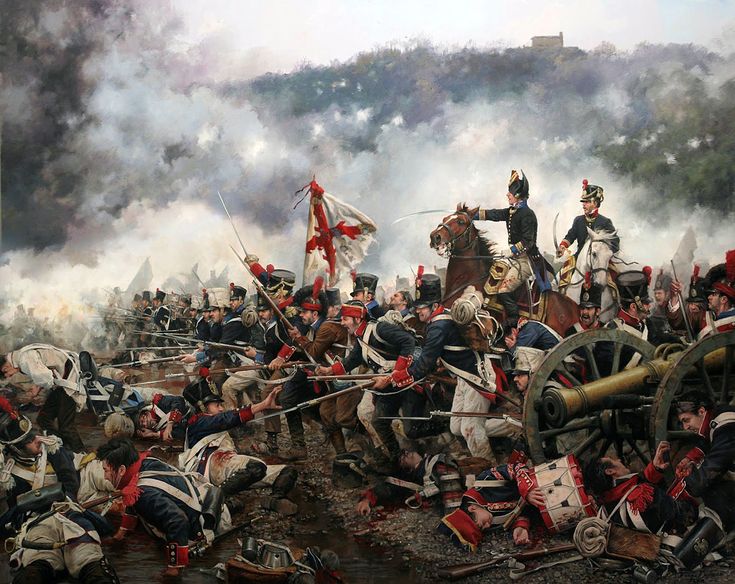
Sexual selection theory is one of the most outmoded theories, which is also known as the "darwinian bateman paradigm." Charles Darwin presented this theory in 1871 in his book,“The Descent of Man, and Selection in Relation to Sex and The Selfish Gene”, in which he explained traits of female and male species involved in reproduction that assist them in selecting a mate. According to Darwin, females are naturally selective, expensive, and monogamous, while males are competitive, aggressive, and polygamous. He stated that eggs are expensive as they are the goal of hundreds of sperm and rich in nutrients, while sperm are cheap and numerous. Modern science debunks these rigid stereotypes as these specific behaviors don't entirely align with nature; a well-known behavioral ecologist, Joan Roughgarden, stated that these behaviors are diverse and way more complex in nature. There are many examples that debunk these rigid traits. Superb fairywren birds are considered monogamous, but modern DNA testing on the baby birds revealed that up to 76% of the babies were not fathered by the male partner in the nest. Female birds tend to mate with other males for genetic diversity. There is this common myth that female species are naturally peaceful, but this isn't true; in meerkat societies, dominant meerkats constantly physically hurt and subjugate other females so they can't reproduce,and in some cases even mortally wound their babies so only their offspring can survive. There is another myth according to which if a male fights with another male for a female, she will have to mate with him, no matter what. This isn't true; it is seen in chickens that if a low-ranking rooster forces a chicken to mate with her, she can physically discharge that sperm after mating. These examples suggest that these behaviors are not fixed but diverse in nature. The example of the mormon cricket invalidates the myth that sperm are cheap and abundant and males are not picky regarding their partners. It takes 27% of their entire body weight to ejaculate a single spermatophore, which is a huge, nutrient-rich packet with a gelatinous food present for the female and for ensuring a safe and successful sperm transfer. It takes so much energy to produce this, so these crickets are selective about their partners, ignoring smaller females and mating with larger ones.
One question must have arisen, which is why does altruism exist? Why would an organism risk its survival to help others? And what about those organisms who do not cooperate? Some famous theories answer these questions. The famous evolutionary biologist Robert Trivers put forward his theory of reciprocal altruism, which explains that animals help each other with the expectation of receiving the favor back in the future. This process involves specific environmental conditions, which are regular social interactions, the cognitive ability to detect cheaters, and a low cost with massive benefit ratio ensuring that helping others does not actively endanger one's own survival. Many animals don't reciprocate,while still benefiting from collective labor, this behavior is called free riding. In some animal groups, these individuals are tolerated, but in others, stiff social punishments are given. Richard Dawkins, the famous British evolutionary biologist, detailed these mechanics in his well-known book,“the selfish gene”. In his book, he explained and simplified complex mathematical expressions related to genes. He presented the idea that genes essentially commandeer animal bodies as temporary vehicles for their own inheritance, utilizing cooperation whenever it serves that transmission.
So, for this transmission, cooperation plays a pivotal role. The conclusion is that evolution never had a plan for perfectionism. It did whatever it could for survival, whether that survival occurred through cooperation, genetic corrections, or the violence that humans used. As a result of both nature and nurture, that violence became amplified, culminating in every type of crime and violence we witness today. Evolution simply used every possible way out for survival. Ultimately, to keep the species alive, evolution cultivated diversity in mate selection, ensuring our ongoing survival.
Author and Researcher: Muneeba Asma