Economic Philosophies
During my times of adolescence, I had contempt for the subject of Economics and I don't contemplate the reason for it. However, probably I was trying to avoid the realities of this world and its workings but with time, when I started reading about the past, I came across the history of different nations and, along with that, their religions, economic systems and administrative affairs. From there, I got enlightened about the different economic philosophies that are currently prominent across the globe.
Unfortunately, the country I live in has its population deprived of even basic resources and daily bread, which never gives them the time to look after the exploitative system that is forcing them to live in this misery. Let me articulate this for you in chronological order because it will be the only way you can gulp down the context and understand it in a broader context. So, a long time ago, we, Homo sapiens, were hunter-gatherers. Our priorities revolved around hunting animals in the morning and eating them in the evening with our clan, then repeating the same routine regularly without any worry about the future or doomsday. However, due to certain extenuating circumstances, like the limitation of animals to hunt or the plight of environmental conditions, we gradually shifted to the domestication of agriculture and animals, unbeknownst to the fact that it was not them that were being domesticated—but us.
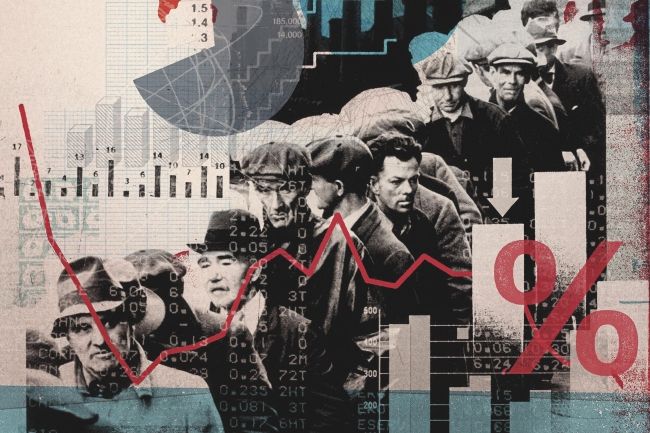
Well, till then, the trade between different communities was relatively simple. Anyone could exchange anything they desired for what they had and obtain what they wanted, but this system was not very reliable, so we started to come up with a medium that could be used for trading and this was the point where currency was introduced. The first universal dollar was introduced in the 16th century in Spain and from there this concept spread across the globe. However, I do want to stress the reality that the essence of this currency system itself doesn't hold anything realistic. It is just a piece of paper with some glimmering signs printed on premium-quality paper that can last for decades, but the faith we put in it is the only thing that makes it entitled to have such an undebated significance. Obviously, these sacred papers were printed in respect of the gold reserved in banks, but that's a topic to be discussed on some other day.
Cutting to the chase, since the dawn of the Industrial Revolution, we have witnessed the excrescence of wealth in those nations that adopted and foresaw its countenanced inevitability. However, those like us, the people of the Indian subcontinent who repudiated going with the flow, ended up being ruled by a handful of folks from the East India Company, who later plundered our wealth and exponentially increased their overall reserves. Even at the individual level, this kind of economics was wrenching everyone because the capital generated by the bourgeoisie (owners of industries or factories) invigorated them to reinvest and grow more, whereas the proletariat were destitute because their wealth remained stagnant, which increased the void between the rich and the poor to a belligerent extent.
To save us from all this misery and to provide us with a counter to this free-world economy, we were introduced to the teachings of Karl Marx, who strenuously put forth the concept of a utopia called Communism. In layman's terms, we can compare them for now to understand them more intuitively. So, capitalism, as we had thus far, gave us the right to own houses, factories, or everything we purchased or traded with our own money. It was unregulated, and we could have as much as we wanted without any hindrance. On the contrary, we had Communism, which promised us a classless society where there was no rich or poor, and everything was owned by everyone. For instance, the state owned the land and distributed it according to need, the factories were under the state, and everything was controlled by the government. There was no individual who owned something because everything was shared among the commune.
We can consider both as the extreme ends of the spectrum; therefore, we had a more moderate philosophy called Socialism, which advocated the right to own some basic property. However, the large-scale industries would still be run and regulated by the state, as we witnessed during the Zulfiqar Ali Bhutto period, when he nationalized every industry under his agenda of Socialism. Anyhow, I want to assure you that I'm not endorsing any one of them here because each one has its own pros and cons, and they have all evolved over time according to the states and their needs.
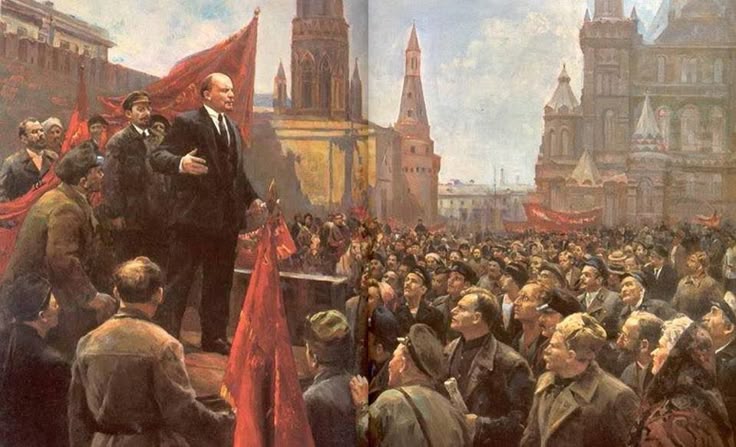
If we want to look at the practical examples of these philosophies, then North Korea is an example of Communism (not exactly, TBH), Russia represents Socialism, and America is Capitalist. Considering the current status of oligarchy in America, there is indeed extreme economic inequality, but maybe we can find an escape from this fate if we consider Darwinism, which vouches for the survival of the fittest.
However, with time, different European nations shifted themselves from pure capitalism to relatively capitalist yet welfare states. For example, the welfare fund, which is also known as the Government Pension Fund Global (GPFG) of Norway, surpassed 1 trillion dollars and it offers free education, healthcare and other basic amenities for the well-being of not just the current population but also future generations and it was derived from social democracy. Thus, out of the many interpretations and possible implementations of different economic systems, I find social democracy more pragmatic and useful for everyone. The state should tax its citizens, but in return, it is obliged to fulfill the basic needs of everyone who abides by the constitution of that state. It's not literally derived from socialism because sometimes it is ambiguous and I used to associate social democracy with partial socialism, but they are mostly similar. The only difference between them is that socialism doesn't allow large-scale industries to run independently out of the fear of oligarchy, whereas social democracy allows regulated freedom for individuals to own industries under the notion of a free world.
Author and Researcher: Mohsin Ramzan